Hi, Ava. I am writing to you to assess your website, avajayne.com. At first glance, I see that you haven’t done any intensive editing on your homepage yet. Your content is still unpublished or inaccessible as well. I’m using your website description in the PUB101 Google Drive document to contextualize my feedback for your website.
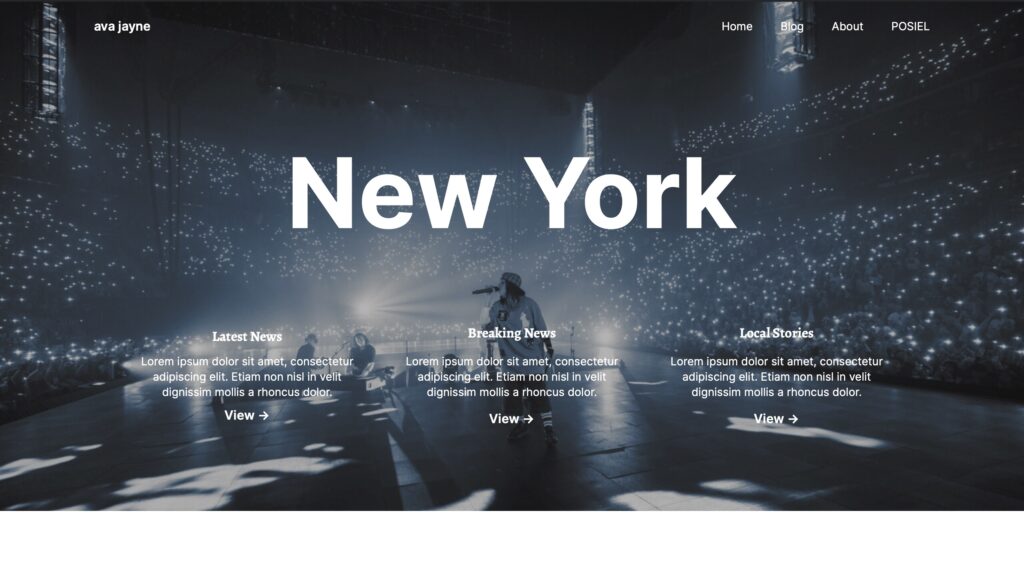
The template you chose is decent, although depending on what type of content you are doing, I would choose something with simpler elements. This template appears more suited towards a business or event hosting. I would suggest deleting all the blocks on the homepage and Strat from something super simple. It would not only help get your website presentable much faster, but having a dry background would make your photos pop better. Consider how these websites style their photo galleries:
Aside from this I don’t have much feedback to offer, as the only signs of your authorship I can find is the website name in the top-left and the navigation menu. None of the links in the navigation menu work, so if you have completed other pages on the site, I haven’t been able to access it.
Good luck, Ava! WordPress is difficult to get a handle of, but once you get all the main elements up and running, things will hopefully start coming together! I look forward to seeing your website thrive!
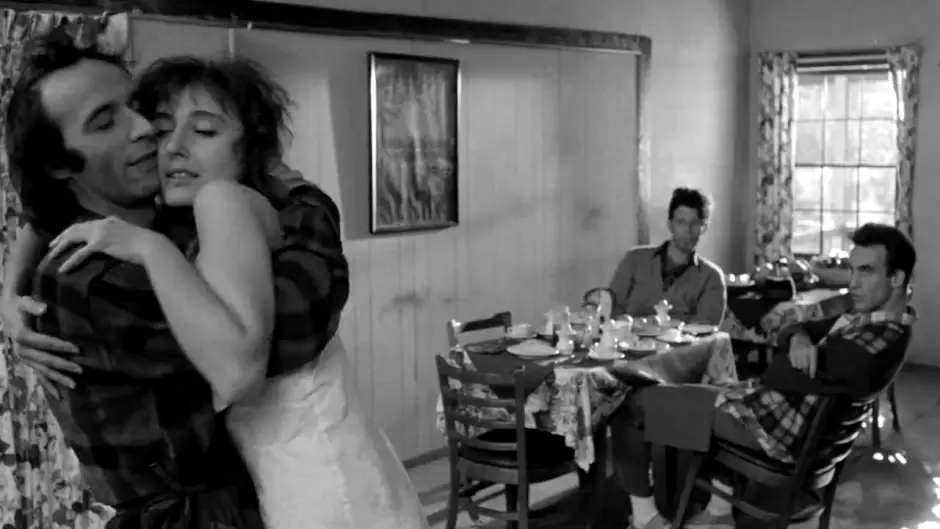
Bob, as portrayed by Comedian and Actor Roberto Benigni in Down By Law .(1986)
Roberto, who goes by “Bob” to friends, is an Italian restauranteur and artist based in the United States. Originally immigrating to New Orleans in 1986, he was tried and convicted for manslaughter after an altercation in a card game went sour. Several months later, he escaped the Orleans Parish Prison and became a fugitive of the law ever since. The events surrounding his first year in Louisiana serves as the basis for Jim Jarmusch’s film Down By Law. In the film, he is portrayed by Roberto Benigni, who co-starred alongside Tom Waits and John Lurie.
This interview took place in an undisclosed location in a small-town coffee house somewhere in the Deep South.
I: Hey Bob. How are you?
B: Hello, my friend, I am doing wonderful! And yourself?
I: I’m doing alright. I’m still getting used to the heat down here. I’m trying not to itch the mosquito bites.
R: Yes, yes. Lots of mosquitos. We don’t have so much mosquitos in Italy. But you know, I have a secret for the mosquitos, to make them go away.
I: Do tell.
B: Garlic. Lots of garlic.
I: I think that’s for vampires.
B: Vampires! A-ha, is good for that too! Maybe mosquitos and vampires, they’re not so different. My wife Nicoletta, she cooks with lots of garlic, and the mosquitos, they never want touch us. I eat so much garlic sometimes people don’t want to come near me either!
I: So what have you been up to since the events of Down By Law?
B: Many things, my friend, many things. I ran a restaurant in Louisiana, near Texas border with Nicoletta. It was a very beautiful place, we lived there for almost twenty years. But, eventually we had to move.
Bob, Nicoletta, Zack, and Jack at Luigi’s Tin Top, a remote roadside restaurant near the Louisiana-Texas border.
I: What happened to the restaurant?
B: Well, it had many problems. Not a lot of people come to the restaurant, it was very far away from the city. We have travellers come by sometimes. Nicoletta is so happy to feed them, sometime she forgets to charge! Anche, there was one time when the criminals who escape the prison came to the restaurant. They escaped just like I did so many years ago, and just like me, they found this restaurant in the middle of the Bayou. Nicoletta, she says to me, “Betto, you know if the fugittivi from the prison can find this place, then so can the polizia.”
There was one time the policemen did come into the restaurant! They were doing the patrol, and they came in because they were hungry. And they did not recognize me, che fortuna, because this was many, many years after my escape. But my heart, it was a pounding like a rabbit! I stayed as much in the kitchen and I never looked them in the eyes! I was hoping they would eat quickly and go away. But they kept ordering more food because they loved the cooking so much! Our children would keep coming to the dining room to play, even when Nicoletta told them to stay upstairs! But the policemen were so kind to the children.
After they paid, they wanted to see me so they could thank me! I was so overjoyed by their kindness, I almost forgot about my situation. I wanted to kiss them on the cheek and shake their hands. But Nicoletta told me, they would recognize me. I was a very unique prisoner in Orleans, because I was the only Italian, and my personality was so big.
Nicoletta told the policemen, “Bob is sick so he cannot come see you, but he is very thankful.” I had Nicoletta give them a wood carving of a bird that I make, so I could still show my gratitude.
But the reason we had to move away from the restaurant, was because of this terrible storm. It destroyed everything we had. Many people had died that storm. Still I think about that restaurant, it is now only a very beautiful memory.
I: What did you do when you left?
B: Well, we traveled to many places, in Mississippi and Carolina and Florida, like in a Mark Twain book. Our family, we had not a lot of money, but the memories were beautiful. We made it like a game for our children. We had a big adventure, where they learned to read maps, and collect insects and leaves from every town we passed by. They never knew we were poor! Eventually we found a new place to live in Georgia. I found work in the city and I was able to take the children to school. It is difficult work, and I don’t have very much time to read poetry and do woodworking, but it was also a beautiful time.
I: Do you have more time these days?
B: Yes, I have a lot more time now, because my children are more old and they help with the house a lot. I have much time to read and make art.
I: Who’s your favourite poet?
B: Walt Whitman. I read many of his poetry in Italian when I was a young boy, but now I can read English better, and I see a new beauty coming from his words.
I: Where do your best ideas come from?
B: In Italian.
I: What do you do when you are stuck?
B: I go for a walk, I look for the birds, and sometimes I go for a swim. The best ideas, sometimes they are found in nature. Nature is full of beautiful ideas.
I: How do you find love?
B: Love, you don’t need to find. You just need to see, it’s already inside you. But sometimes when people are young, they are told it’s somewhere else. So sometimes it takes a very long time to find.
I: Thank you for your time, Bob, it was very nice to meet you.
When Function Over Form Gets in the Way of Creativity.
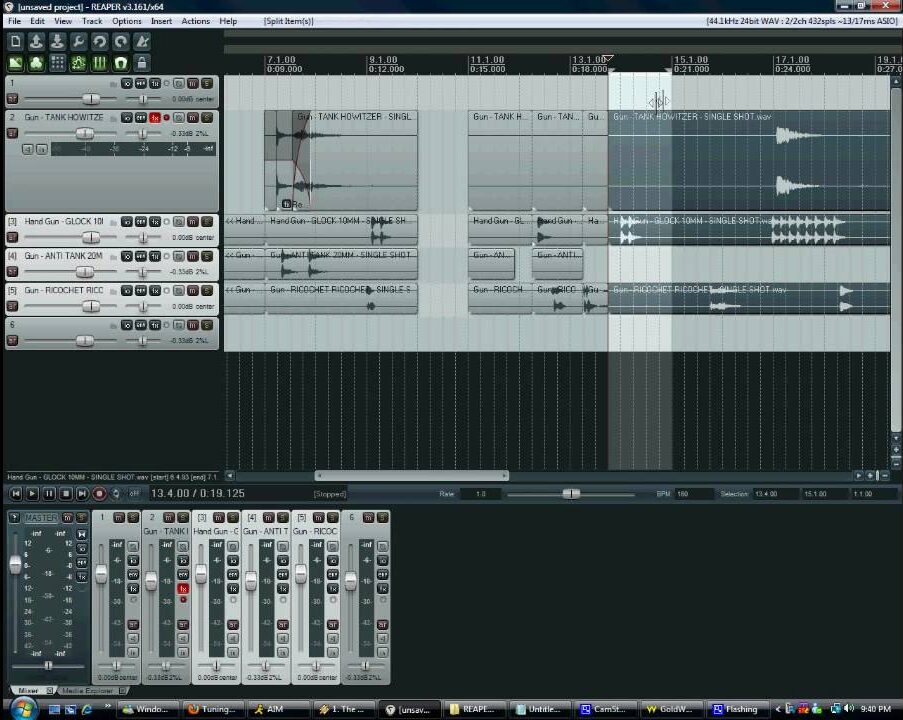
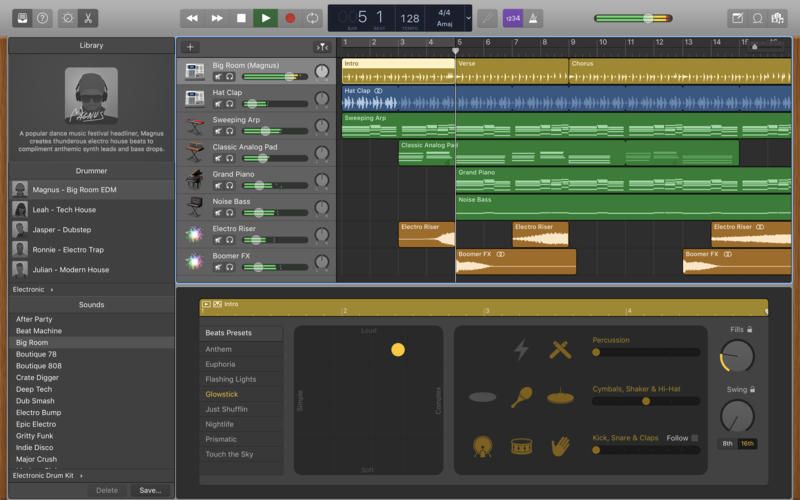
I remember a few years ago my friend wanted to get into recording music, without having any previous recording experience. If she had a MacBook or iPhone, GarageBand would have been the obvious easy choice, but we were both Android and Windows users. At the time, my DAW (Digital Audio Workstation) of choice was Reaper, a Windows-compatible program that, after hurdling the learning curve, was pretty much capable of everything you could ask for at the price of free. So my friend downloaded the program, tried it out, and came back to me. She was mortified by the how hostile and complicated the User Interface was, and didn’t want to touch it with a ten-foot pole.
It’s easier to notice the difference when you actually use the programs yourself, but from a quick look you can start to see how much more cluttered and intimidating the Reaper interface is(left), compared to the simplified and graphically pleasing GarageBand interface(right).
I thought she was being a bit stubborn, and that with some tutorial videos and persistence, she could get creating in no time. But the more she tried to engage the software, the more the software brick-walled her. It resulted in endless frustration and it was killing her spark for creativity, which was defeating the purpose of the whole thing.
I feel guilty now for invalidating her experience in the first place. I wish I instead told her that it’s okay to just try something else. In retrospect, Reaper really is unintuitive, even when you learn it, customize it, and get things going, it’s still kind of unintuitive. I bought a MacBook last year and I have to say, despite everything my dear Reaper and I have braved together throughout the past, GarageBand just feels so refreshingly easy.
Form vs. Function
The point is, I used to discredit tools like this that put form over function, aesthetics over versatility, and immediate gratification over long-term mastery. In the end, artists want to create, and we don’t want all this technical shit to bog us down when we have ideas pouring out. Ideally, we want a really good toy or instrument to evoke inspiration or new ideas.
Tactility and aesthetics are just as important as functionality when it comes to creativity. When someone is buying a guitar, the question of how it looks on you and how it feels matters as much as the craftsmanship and quality of sound. To a lot of people, it’s probably more important. It could make the difference between a guitar that gets picked up and played everyday and a thousand-dollar wall ornament collecting cobwebs in the corner.
Teenage Engineering
The famous teenage engineering OP-1 field portable synthesizer.
Let’s take a look at Teenage Engineering, a popular music hardware manufacturer. You could take a quick look at any of their products or videos, and it’s immediately clear what sets them apart from the pack. They take after Apple’s design ethos: sleek, minimalist, bold, and tactile. Even their product reveal campaigns resemble Apple commercials!
With it’s smooth layout and inviting design, I’d imagine that even a non-musician wouldn’t be able to resist getting their hands on an OP-1.
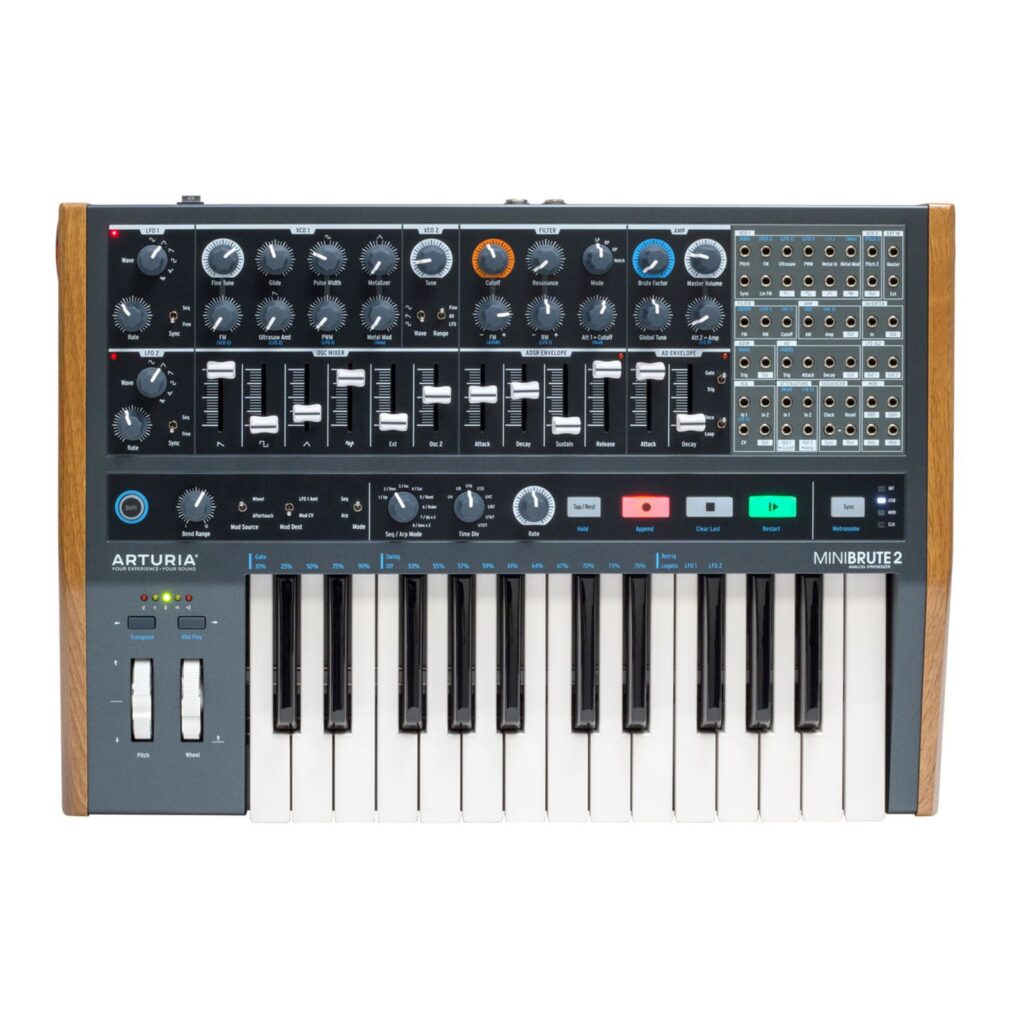
The Arturia MiniBrute 2 (above). It’s still quite pleasing, but it lacks that slick touch and mass appeal factor of teenage engineering’s OP-1.
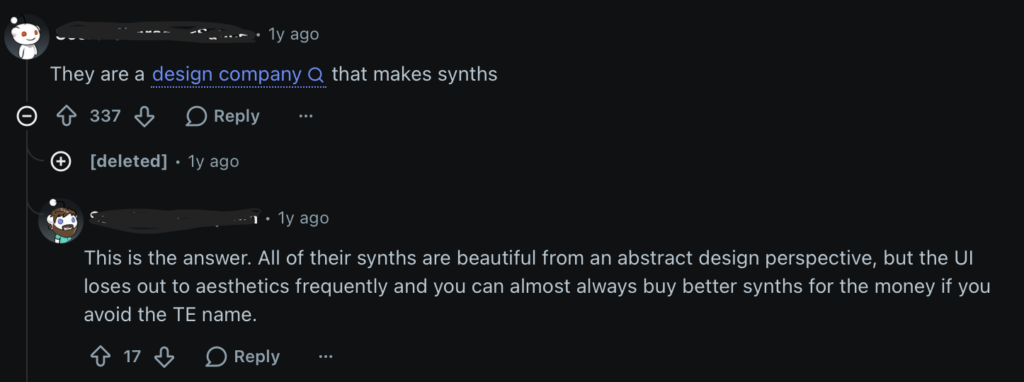
As popular as Teenage Engineering is among artists and producers, they are not without their detractors. Many fault Teenage Engineering’s products for prioritizing aesthetics over functionality, for being over-priced, and under-delivering when compared against similar products by other manufacturers. They sacrifice versatility, flexibility and capability in the long-run so they can dazzle on first impression. Take this reddit thread below for example:
A chunk r/synthesizer thread discussing opinions on teenage engineering’s products.
For someone who is used to synthesizers, the OP-1 greatly lacks in UI transparency. Someone who actually utilizes every knob, slider, and plug-socket on the MiniBrute might get frustrated clicking through the OP-1’s tiny LED to achieve the sounds they want. For them, the OP-1’s interface is unintuitive.
But consider someone who has never touched a synthesizer like the MiniBrute. It would be overwhelming to deal with all those dials, buttons and switches, while on the other hand, the OP-1 looks far more appealing and quick-to-use out of the box. They don’t have to have years of learning and experience behind them to pick up and start creating.
Both of these users are completely valid in their feelings and know what works best for them. If you gave the synth-veteran the OP-1 and the synth-rookie the Arturia MiniBrute, both would feel stifled and oppressed by technical nitty-gritty, and it just wouldn’t be as fun to make the real magic happen.
The r/synthesizer community may have some valid reasons to recommend more powerful and value-friendly synthesizers in place of the OP-1, but if at the end of the day, the OP-1 simply looks more appealing and fun to use, that is reason enough for the prospective buyer to justify their reasoning.
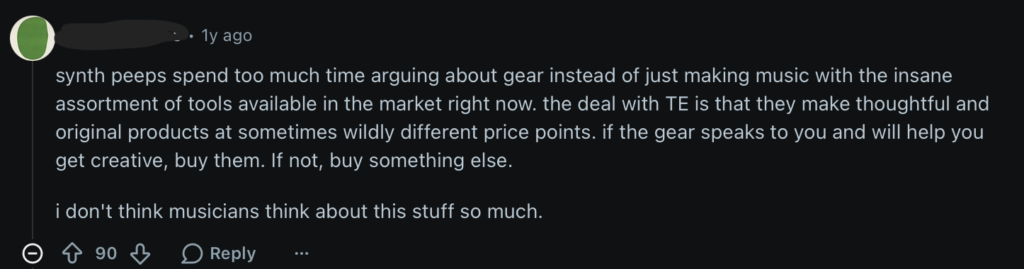
Another user from the same thread dropping off seeds of wisdom.
Given these select examples above, I must clarify that Teenage Engineering is nonetheless quite popular within the professional music production community. Many famous musicians like Bon Iver, Childish Gambino, and Flume have used OP-1s on their recordings, in live sets, own as a super-portable option for recording ideas on-the-go.
Accessibility is for everyone!
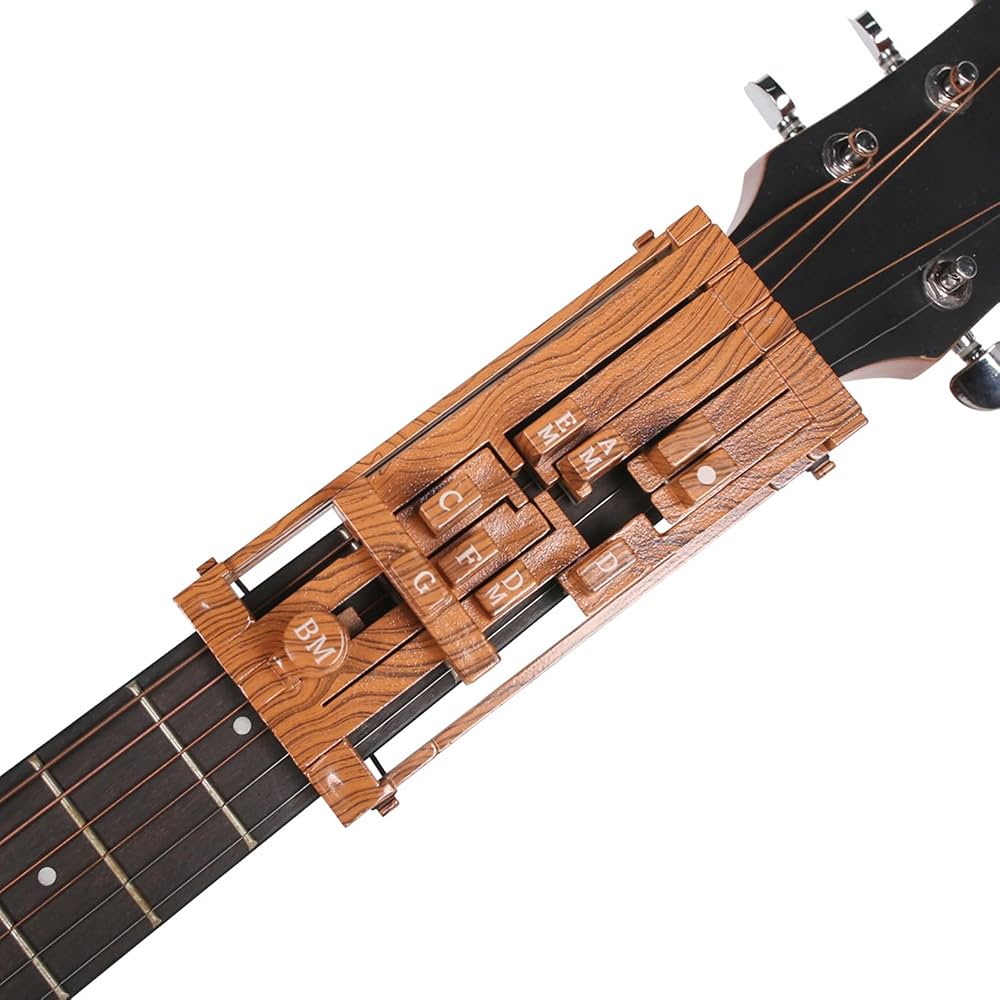
A guitar chord presser accessory I found online.
Here I present another case. It’s beckoned by several names: guitar chord-presser, guitar chord trainer, guitar learning aid, and so on. Essentially, It is a mechanical accessory that attaches to the neck of your guitar, and at the press of a single tab, it mechanically frets all the notes that create the corresponding chord. It overrides the precision and dexterity needed to articulate the notes so that you can strum away to your favourite tunes, without a fret! (ha-ha.)
It’s a wonderful accessory, and no one can deny that it’s a lifesaver for people who suffer from arthritis, motor-skills complications, or similar impairments. But who’s to say such a device should only be limited for people who have a “legitimate” accessibility issue? If this device inspires you to play guitar, then no one should stop you from using one. It’s damn difficult instrument to learn, and some people just want the gratification of being able to get to the end of a single song early on. Of course, you can still learn how to articulate chords aid-free later. But maybe you don’t even want to do that, and just enjoy using the chord-presser to get your ideas flowing. Don’t let some greasy unemployed guitar-playing puritan tell you you’re not really playing guitar when you’re using one of these devices because as far as I’m concerned, if you’re making sounds and having fun doing it, that’s what counts.
So what does this all boil down to?
A lot of discourse around music hardware and programs (like in many other fields) place versatility, value-for-money, and craftsmanship high on the hierarchy of importance. That’s not a bad thing at all. But remember, musical instruments are not a pure utility in the same sense a lawnmower, a car, or a coffee machine is. In essence, they are toys designed to stimulate your imagination and creativity. Elements like novice-friendliness, aesthetics, and (to a certain extent) gimmick features are conducive to creativity, and thus, can be considered with equal importance when buying new equipment. Certain music production communities can be hostile and stubborn towards creators who lean in to products that cater to these things, as though they are only selling themselves short by buying an over-hyped or inferior product. In the end, you are only going to use what that speaks to you and gets you in the creative zone.
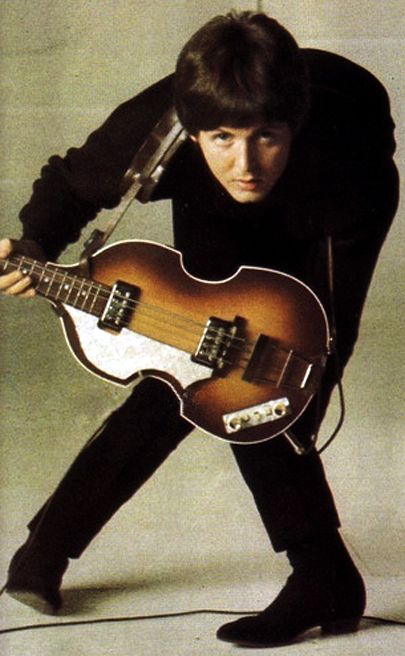
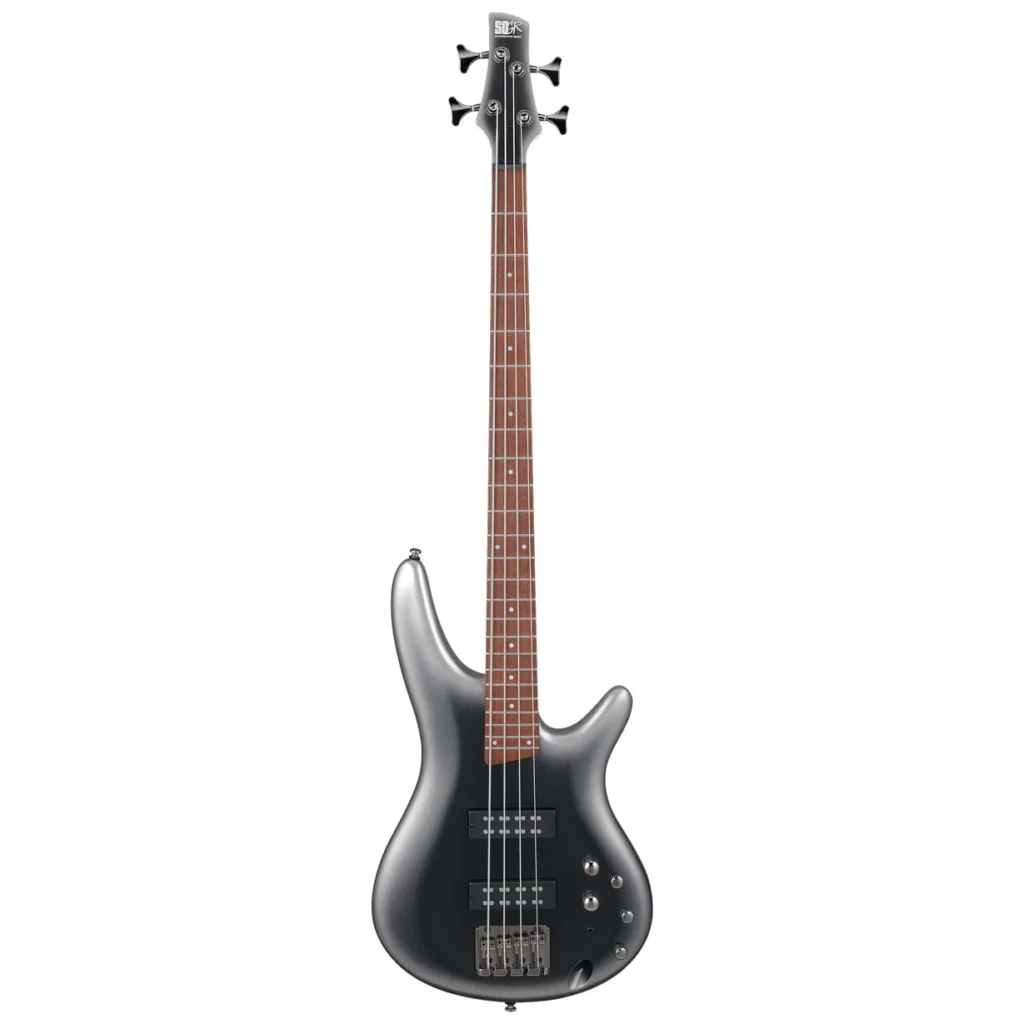
Paul McCartney with his Hofner 500/1 (left), and the Ibanez SG300EMGB (right).
By the way, check out this Hofner Bass that Paul McCartney made world-famous. I’ll let you in on a little secret. It’s actually a cheaply-made instrument that didn’t sound particularly good and suffered from intonation issues. I bought this bass guitar with my parents when I was 11 because it looked cool and had that the ultimate celebrity endorsement that money couldn’t buy. I loved playing it. When I brought to my lessons, my bass teacher took one look at it, scoffed, told me what a piece of shit it was, and eventually convinced me to exchange it for a plain black Ibanez SR. Go figure.
This week I’ve been feeling unusually more sociable and felt a high appetite for conversation and connection form strangers, even before reading the assigned texts for this class. After reading Hamblin and Charlebois and Shen’s articles, I felt like I had a mini breakthrough with the triangulation method. The ultimate formula for every icebreaker! Once you realize that structure exists in everyday conversation I see it everywhere.
This week I had several mini-conversations with strangers, some of which lapsed briefly and some which lasted maybe 5 minutes. I’m taking an ECON 103 course and I was curious to know other people’s thoughts on the TA, because I thought the first tutorial last week was an absolute disaster. I used that as an icebreaker and exchanged names with 3 different students, right before the class and during break, and learned about them and they learned a bit about me. I was already incentivized to make friends in that class because the professor drove home the fact that the class was difficult and study groups were highly recommended. A couple of them seemed a little bit uninterested in conversation: either they were deliberately being uninteresting or they really were uninteresting. The girl I talked to Ellie, was interesting, and she talked about switching out from Engineering to Economics. I didn’t learn much about anybody that morning because the conversations were brief, but I have some leads now.
I had a more engaging conversation with this girl name Shub. I was looking at events on a posting board near the AQ, and she was putting up a poster for a Health Science Event that was happening this week. I asked her about it and she gave me some details, and then I asked about her Masters, which was in Health Science. I mentioned the coincidence between the event and me learning about the health benefits about talking to strangers and establishing social connections in the community. She concurred and mentioned that social isolation was one of the topics being discussed by one of the presenters in the event. She also thought it was funny I was using her to complete my assignment. I spoke with a couple other strangers that day, but I felt that I could do better. After all, these weren’t total strangers, they were people with whom I already something convenient in common. I was wanting to find someone on the street that I knew nothing about that I could approach, to really put myself out of my comfort zone.
However, I can already corroborate Hamblin, Charlebois and Shen’s findings, that talking to strangers have a direct effect on mood and wellbeing. I not only felt less depressed and more energized, but I was beginning to desire and seek connection more strongly than I did before. I felt like I was finally starting to understand this basic skill of meeting strangers that I used to be jealous of other people for having. It’s difficult to take the risk of breaking the ice with a stranger, but the more I do it, even if it doesn’t lead anywhere interesting, feels empowering and makes the world seem a little less isolated.
Creativity takes time. Some ideas require an uncomfortably long and uninterrupted period of time. One of David Lynch’s early mentors, Bushnell Keener, said to him: “If you want to get one hour of good painting in, you have to have four hours of uninterrupted time.”
When we think of our favourite artists, we might imagine that they are just always bursting with inspiration, and once sat down in their creative space, they go at it, drafting, reorganizing, cutting, editing, doing, un-doing and re-doing. That’s sort of the glamorous Hollywood version of it. But we don’t typically imagine them in periods of creative block. It’s that moment when they seem like they are much more like ourselves, where there is nothing in arm’s reach and the artist much reach further. Lynch elaborates:
“It’s a matter of sitting back and studying it and studying it and studying it; and suddenly, you fin you’re leaping up out of your chair and going in and doing the next thing.” He ends the thought: “If you know you’ve got to be somewhere in half an hour, there’s no way you can achieve that. (Lynch, 2006, pg. 11)”
Down Time.
It’s becoming ever more difficult to find ourselves that space for long, deep uninterrupted time. Many of us who have jobs, classes, chores, or children might say to Bushnell Keener: “Who the hell has 4 hours of uninterrupted time, anyway?”
But even when we do have down-time, sometimes at the bus stop, walking the dog, having our first morning cup of coffee, or laying awake in bed; our phone is always beside us.
With unlimited access to the infinite spring of information, we are able to impulsively zap away every pang of boredom the moment it creeps up. We put in our earphones. We google a query. We check our notifications. We watch a movie. Sometimes we don’t even want to, it’s just an automatic muscle memory response. Our impulse to eliminate boredom prevents us from immersing ourselves in it.
Boredom.
A lot of us may think of boredom as something bad, and some philosophers and writers such as Kierkegaard or Baudelaire would agree. Even the earliest Christian teachers had something to say about idle hands. However, consider Walter Benjamin. He had a really romantic and refreshing way of seeing boredom.
In his essay The Storyteller, he touts: “If sleep is the apogee if physical relaxation, boredom is the apogee of mental relaxation. Boredom is the dream bird that hatches the egg of experience. (Benjamin, 1936, pg. 367)” When we allow ourselves to steep in boredom, once we overcome our restlessness and fidgeting, our brains begin to attune to a slower frequency and we find ourselves capable of deep contemplation and immersive reflection. We may begin to observe details in the banal. In Lynch’s case, an idea that’s been laying dormant suddenly leap out from the dark in front of him. Benjamin describes boredom as:
“…a warm gray fabric lined on the inside with the most lustrous and colourful of silks. In this fabric we wrap ourselves when we dream. We are at home then in the arabesques of its lining.” (D2a,1, Arcades Project, Benjamin.)
Immersive Attention.
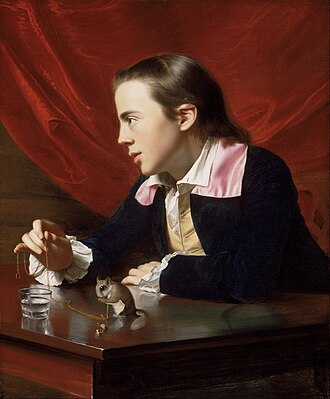
In the article titled: Harvard art historian Jennifer Roberts teaches the value of immersive attention, Mrs. Roberts divulges her prescribed method for students preparing to write an extensive art analysis. Before allowing the student to do any research on the piece or the artist, she assigns them to “go to the Museum of Fine Arts, where it hangs, and spend three full hours looking at the painting, noting down [their] evolving observation as well as the questions and speculations that arise from those observations. (Roberts, 2013)” Now doesn’t that sound familiar? Roberts claims her initially reluctant students again and again return surprised by how much detail and depth they uncover from within the paintings in those three hours.
This process of deceleration is meant to slowly open up the senses. You get past the immediate first impressions, and and then to the point when you’re convinced you’ve observed every detail sufficiently. And you keep going far beyond that point. And then you see something new. And something else new. You discover peculiar details and make subtle but profound connections. Roberts describes her own process as she observes John Singleton Copley’s 1765 painting A Boy with a Flying Squirrel:
“It took me nine minutes to notice that the shape of the boy’s ear precisely echoes that of the ruff along the squirrel’s belly— and that Copley was making some kind of connection between the animal and the human body and the sensory capacities of each. It was 2 minutes before I registered the fact that the fingers holding the chain exactly span the diameter of the water glass beneath them. It took a good 45 minutes before I realized that the seemingly random folds and wrinkles in the background curtain are actually perfect copies of the shapes of the boy’s ear and eye…”
And so on. While “it is commonly assumed that vision is immediate,” Roberts explains, “[students discover in a visceral way] that in any work of art there are details and orders and relationships that take time to perceive.”
Conclusion
In a world of instant gratification and hyper-productivity, we are rarely forced into these moments of true down-time, where we allow ourselves to become truly bored and allow our minds to wander uninterrupted into deep territory. And it certainly doesn’t come easy at first. Patience and immersive attention is a skill to be honed, a muscle to be worked and developed. We have to overcome that restless fidgeting urge to distract ourselves from boredom, and instead and embrace the lush grey tapestries that Walter Benjamin speaks so dreamily of. It is there in which our most profound and creative ideas swim, waiting to be caught and reeled back up to the surface. David Lynch says,
“Desire for an idea is like bait. When you’re fishing, you have to have patience. You bait your hook, and then you wait. The desire is the bait that pulls those fish in—those ideas. (Lynch, 2006, pg. 25)”